Buy sociowiki.eu ?
We are moving the project
sociowiki.eu .
Are you interested in purchasing the domain
sociowiki.eu ?
domain@kv-gmbh.de · 0541-91531010
Buy sociowiki.eu ?
Is it safe to cut a Cat6 network cable?
Yes, it is safe to cut a Cat6 network cable as long as you do it carefully and with the proper tools. Make sure to use a sharp pair of cable cutters to ensure a clean cut without damaging the internal wires. After cutting the cable, be sure to properly terminate the ends with RJ45 connectors to maintain the cable's performance and integrity. Overall, cutting a Cat6 network cable can be done safely as long as it is done with care and attention to detail. **
What is wrong with the connection at the Cat6 network outlet here?
The connection at the Cat6 network outlet appears to be faulty because the cable is not properly inserted into the outlet. The cable should be securely plugged in to establish a stable connection. Additionally, the cable might be damaged or the outlet itself could be faulty, resulting in a poor or no connection. It is important to check the cable for any visible damage and ensure it is correctly inserted into the outlet to troubleshoot and fix the issue. **
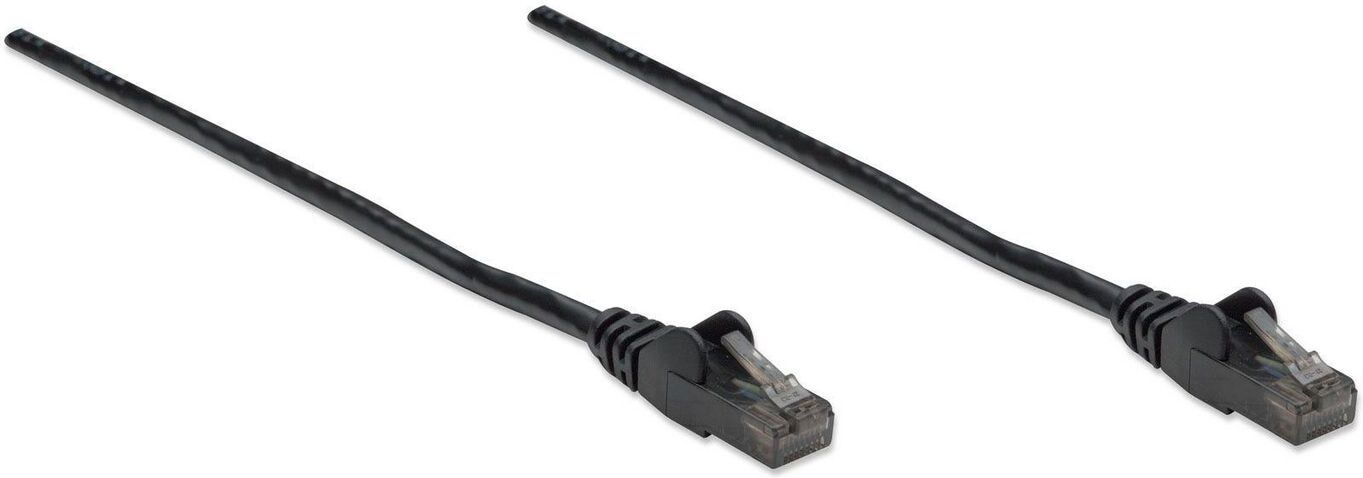

Similar search terms for CAT6
Top-Angebote
Products related to CAT6:
-
Microconnect CAT6 U/UTP Slim Network Cable 5m - RedA slim-profile Cat6 U/UTP (unshielded) Ethernet patch cable, 5 m long, in red, with RJ-45 plugs at both ends. It uses 30 AWG stranded copper (4x2xAWG 30/7) with a PVC jacket and a 3.6 mm outer diameter, suited to dense patch panels and tidy racks where standard 6 mm cables are bulky.17,49 £*Shipping: 0,00 £Secure redirect to the provider


-
Since when have Cat6 LAN cables been around?
Cat6 LAN cables have been around since 2002. They were introduced as an upgrade to the previous Cat5e cables, offering faster data transmission speeds and better performance. Cat6 cables have become the standard choice for many network installations due to their improved capabilities for handling high-speed data transfer and reducing crosstalk. **
-
Is the Cat6 patch panel shielded or unshielded?
The Cat6 patch panel can come in both shielded and unshielded versions. The shielded Cat6 patch panel has additional shielding to protect against electromagnetic interference, while the unshielded version does not have this extra protection. The choice between shielded and unshielded depends on the specific needs of the network and the level of interference present in the environment. **
-
How can I set up a home network using a mix of Cat7 and Cat6 cabling?
To set up a home network using a mix of Cat7 and Cat6 cabling, you can start by connecting all your devices to a central network switch or router using Cat7 cables for the highest performance. For devices that do not require the high speeds of Cat7, you can use Cat6 cables instead. Make sure to properly label and organize the cables to avoid confusion and ensure a smooth network setup. Additionally, consider the length limitations of each cable type to optimize the network performance. **
-
Is the Cat6 cable not compatible with a Smart TV?
Cat6 cables are compatible with Smart TVs as they are designed to support high-speed internet connections and are commonly used for networking purposes. Using a Cat6 cable with a Smart TV can help ensure a stable and reliable internet connection, which is important for streaming content and accessing online services. It is recommended to use Cat6 cables for Smart TVs to take full advantage of their capabilities. **


Which LAN cable should I buy: Cat6, Cat7, or Cat8?
If you are looking for a LAN cable with higher performance and faster speeds, Cat6, Cat7, or Cat8 would be suitable options. Cat6 cables are capable of supporting speeds up to 10 Gbps over shorter distances, while Cat7 cables can support up to 10 Gbps over longer distances and offer better shielding for reduced interference. Cat8 cables are the newest and fastest option, supporting speeds up to 40 Gbps over shorter distances. Ultimately, the choice between Cat6, Cat7, or Cat8 will depend on your specific networking needs and budget. **
What is the difference between a Cat6 and a Cat7 LAN cable?
The main difference between a Cat6 and a Cat7 LAN cable is the speed and bandwidth they can support. Cat6 cables are capable of supporting up to 10 Gigabit Ethernet with a bandwidth of 250 MHz, while Cat7 cables can support up to 10 Gigabit Ethernet with a bandwidth of 600 MHz. This means that Cat7 cables can handle higher data transfer speeds and are more suitable for demanding networking applications. Additionally, Cat7 cables are also shielded, providing better protection against interference and crosstalk. **
Top-Angebote
Products related to CAT6:
-
Is it safe to cut a Cat6 network cable?
Yes, it is safe to cut a Cat6 network cable as long as you do it carefully and with the proper tools. Make sure to use a sharp pair of cable cutters to ensure a clean cut without damaging the internal wires. After cutting the cable, be sure to properly terminate the ends with RJ45 connectors to maintain the cable's performance and integrity. Overall, cutting a Cat6 network cable can be done safely as long as it is done with care and attention to detail. **
-
What is wrong with the connection at the Cat6 network outlet here?
The connection at the Cat6 network outlet appears to be faulty because the cable is not properly inserted into the outlet. The cable should be securely plugged in to establish a stable connection. Additionally, the cable might be damaged or the outlet itself could be faulty, resulting in a poor or no connection. It is important to check the cable for any visible damage and ensure it is correctly inserted into the outlet to troubleshoot and fix the issue. **
-
Since when have Cat6 LAN cables been around?
Cat6 LAN cables have been around since 2002. They were introduced as an upgrade to the previous Cat5e cables, offering faster data transmission speeds and better performance. Cat6 cables have become the standard choice for many network installations due to their improved capabilities for handling high-speed data transfer and reducing crosstalk. **
-
Is the Cat6 patch panel shielded or unshielded?
The Cat6 patch panel can come in both shielded and unshielded versions. The shielded Cat6 patch panel has additional shielding to protect against electromagnetic interference, while the unshielded version does not have this extra protection. The choice between shielded and unshielded depends on the specific needs of the network and the level of interference present in the environment. **
Similar search terms for CAT6
-
Microconnect CAT6 U/UTP Slim Network Cable 5m - RedA slim-profile Cat6 U/UTP (unshielded) Ethernet patch cable, 5 m long, in red, with RJ-45 plugs at both ends. It uses 30 AWG stranded copper (4x2xAWG 30/7) with a PVC jacket and a 3.6 mm outer diameter, suited to dense patch panels and tidy racks where standard 6 mm cables are bulky.17,49 £*Shipping: 0,00 £Secure redirect to the provider
-
Microconnect CAT6 U/UTP Slim Network Cable 2m - RedA slim-profile Cat6 U/UTP (unshielded) Ethernet patch cable, 2 m long, in red, with RJ-45 plugs at both ends. It uses 30 AWG stranded copper (4x2xAWG 30/7) with a PVC jacket and a 3.6 mm outer diameter, suited to dense patch panels and tidy racks where standard 6 mm cables are bulky.13,99 £*Shipping: 0,00 £Secure redirect to the provider
-
Microconnect CAT6 U/UTP LSZH Network Cable 0.2m - GreyMicroConnect CAT6 U/UTP patch cable, 0.2 m long, in grey. Unshielded twisted pair (4 x 2 x 24 AWG solid copper conductors) with an RJ45 plug on each end, a low smoke zero halogen (LSZH) jacket and snagless, latch-protecting boots. Tested to 250 MHz to the CAT6 standard and backwards compatible with CAT5e and CAT5 equipment. Manufacturer part number UTP6002.12,99 £*Shipping: 0,00 £Secure redirect to the provider
-
How can I set up a home network using a mix of Cat7 and Cat6 cabling?
To set up a home network using a mix of Cat7 and Cat6 cabling, you can start by connecting all your devices to a central network switch or router using Cat7 cables for the highest performance. For devices that do not require the high speeds of Cat7, you can use Cat6 cables instead. Make sure to properly label and organize the cables to avoid confusion and ensure a smooth network setup. Additionally, consider the length limitations of each cable type to optimize the network performance. **
-
Is the Cat6 cable not compatible with a Smart TV?
Cat6 cables are compatible with Smart TVs as they are designed to support high-speed internet connections and are commonly used for networking purposes. Using a Cat6 cable with a Smart TV can help ensure a stable and reliable internet connection, which is important for streaming content and accessing online services. It is recommended to use Cat6 cables for Smart TVs to take full advantage of their capabilities. **
-
Which LAN cable should I buy: Cat6, Cat7, or Cat8?
If you are looking for a LAN cable with higher performance and faster speeds, Cat6, Cat7, or Cat8 would be suitable options. Cat6 cables are capable of supporting speeds up to 10 Gbps over shorter distances, while Cat7 cables can support up to 10 Gbps over longer distances and offer better shielding for reduced interference. Cat8 cables are the newest and fastest option, supporting speeds up to 40 Gbps over shorter distances. Ultimately, the choice between Cat6, Cat7, or Cat8 will depend on your specific networking needs and budget. **
-
What is the difference between a Cat6 and a Cat7 LAN cable?
The main difference between a Cat6 and a Cat7 LAN cable is the speed and bandwidth they can support. Cat6 cables are capable of supporting up to 10 Gigabit Ethernet with a bandwidth of 250 MHz, while Cat7 cables can support up to 10 Gigabit Ethernet with a bandwidth of 600 MHz. This means that Cat7 cables can handle higher data transfer speeds and are more suitable for demanding networking applications. Additionally, Cat7 cables are also shielded, providing better protection against interference and crosstalk. **
* All prices are inclusive of VAT and, if applicable, plus shipping costs. The offer information is based on the details provided by the respective shop and is updated through automated processes. Real-time updates do not occur, so deviations can occur in individual cases. ** Note: Parts of this content were created by AI.